If you’ve heard that your air conditioner needs its Freon or refrigerant “topped off” every summer, you’re not alone. This misconception is especially common during the hottest months when your AC system is working harder to keep your home comfortable. However, the truth is that your air conditioning system should not require a refrigerant recharge every year. Understanding how refrigerant works can help you avoid unnecessary HVAC repairs, protect your home’s comfort, and save money.
Understanding Refrigerant: The Closed-Loop System
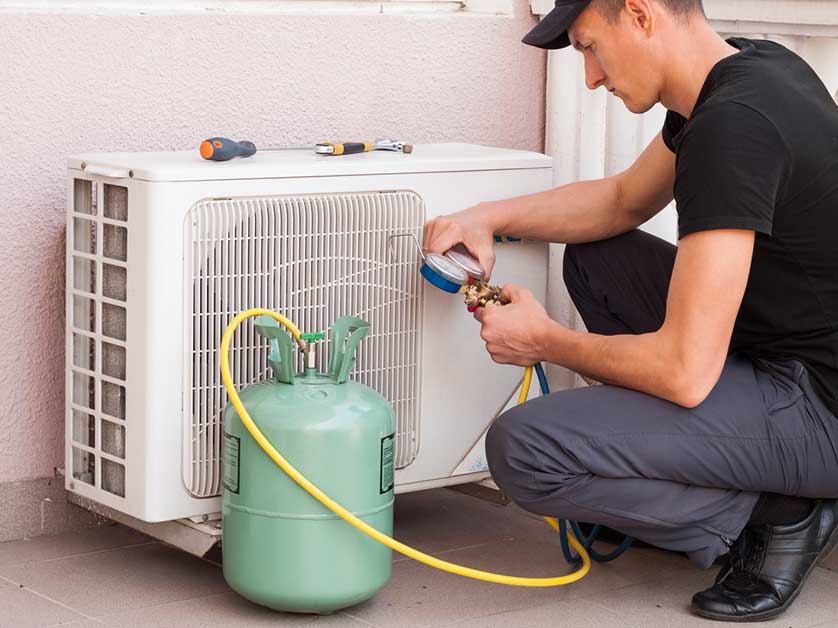
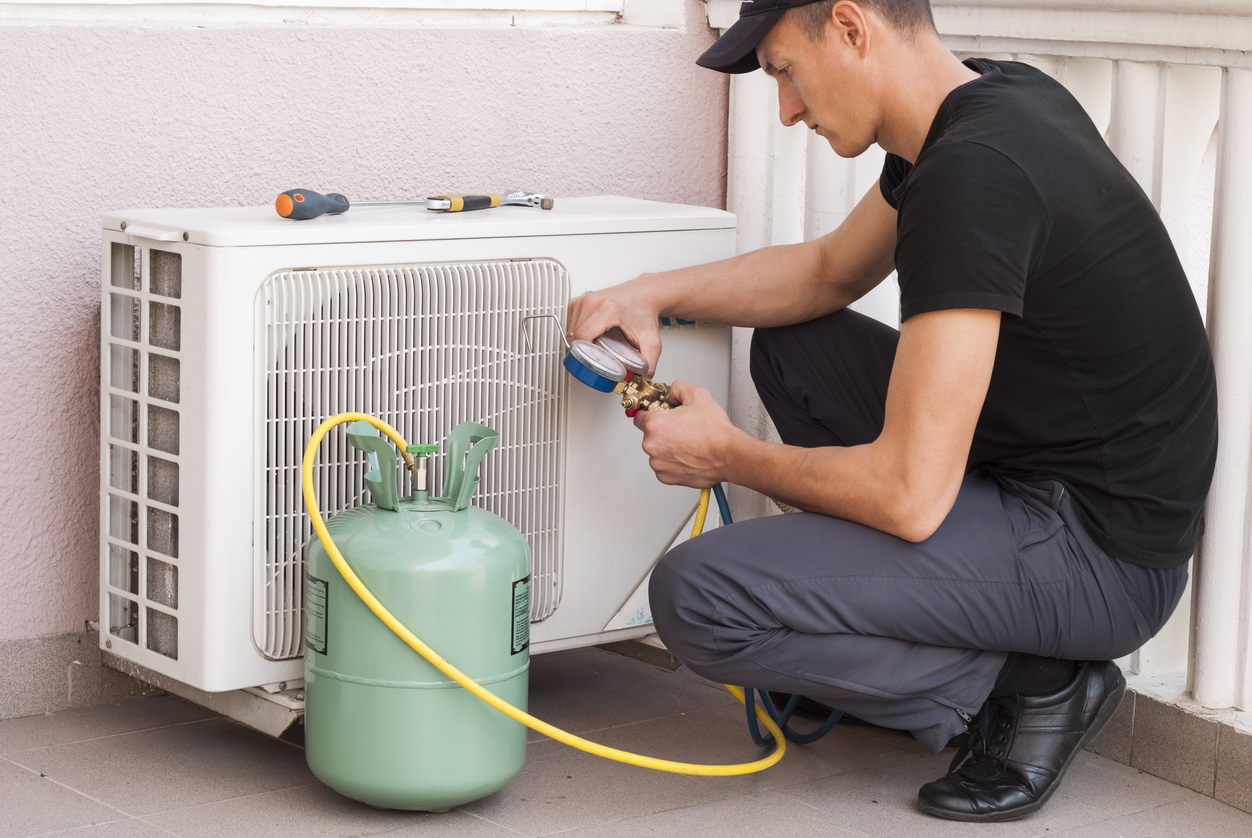
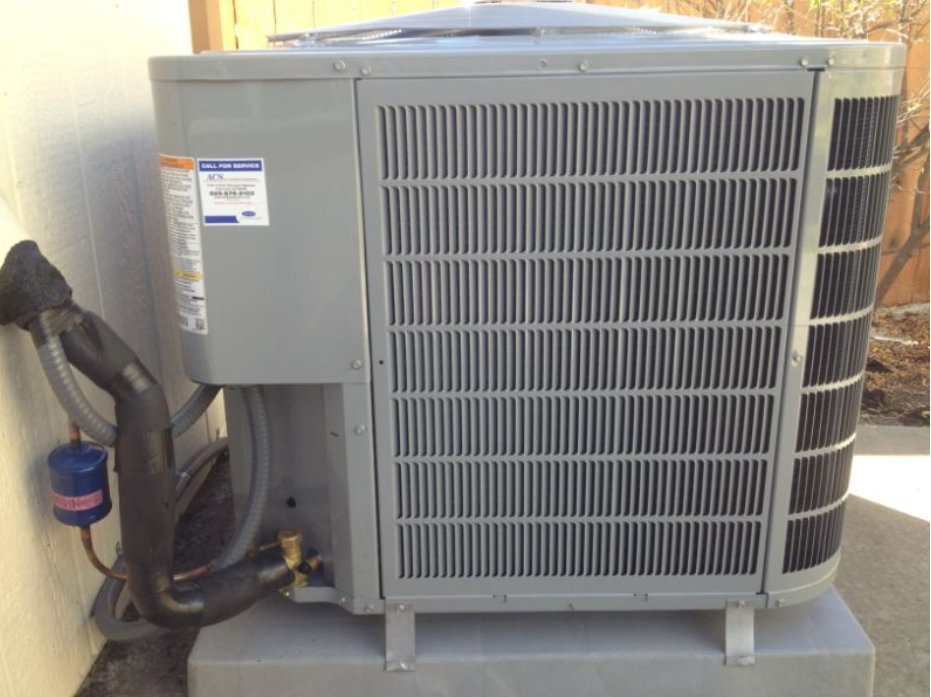
Your AC’s ability to cool your home depends on refrigerant, often referred to as Freon. Contrary to popular belief, refrigerant is not a consumable like gasoline in a car. Instead, it circulates through a completely sealed, closed-loop system where it:
Absorbs heat from your indoor air at the evaporator coil
Releases that heat outside through the condenser coil
Returns to repeat the cooling cycle
Unless your system develops a leak, the refrigerant level should remain constant throughout the life of the unit.
Why “Recharging” Every Year Is a Red Flag
You may be told that your AC needs more refrigerant every summer because it isn’t cooling as well as it used to. In reality, needing a yearly recharge usually indicates an underlying problem. Refrigerant does not evaporate or get “used up” when the system is operating properly. If refrigerant levels are low, your system likely has a leak or may have been incorrectly charged during a previous service visit.
Simply adding refrigerant every year without repairing the leak is like repeatedly filling a tire with a puncture. Eventually, the underlying issue must be fixed. Ignoring the problem can damage your compressor, lead to more expensive HVAC repairs, reduce system efficiency, and shorten the lifespan of your air conditioner.
Signs You May Have a Refrigerant Leak
Warm weather can put additional strain on your cooling system, making refrigerant leaks more noticeable. Watch for these common warning signs:
The AC blows lukewarm or warm air while running.
Your home takes much longer to cool, or the system runs continuously.
You hear hissing or bubbling sounds near the AC unit.
Ice forms on the indoor evaporator coil or refrigerant lines.
Your energy bills increase unexpectedly.
If you notice one or more of these symptoms, have your system inspected and repaired by a licensed HVAC professional instead of simply adding more refrigerant.
The Right Way to Address Cooling Problems
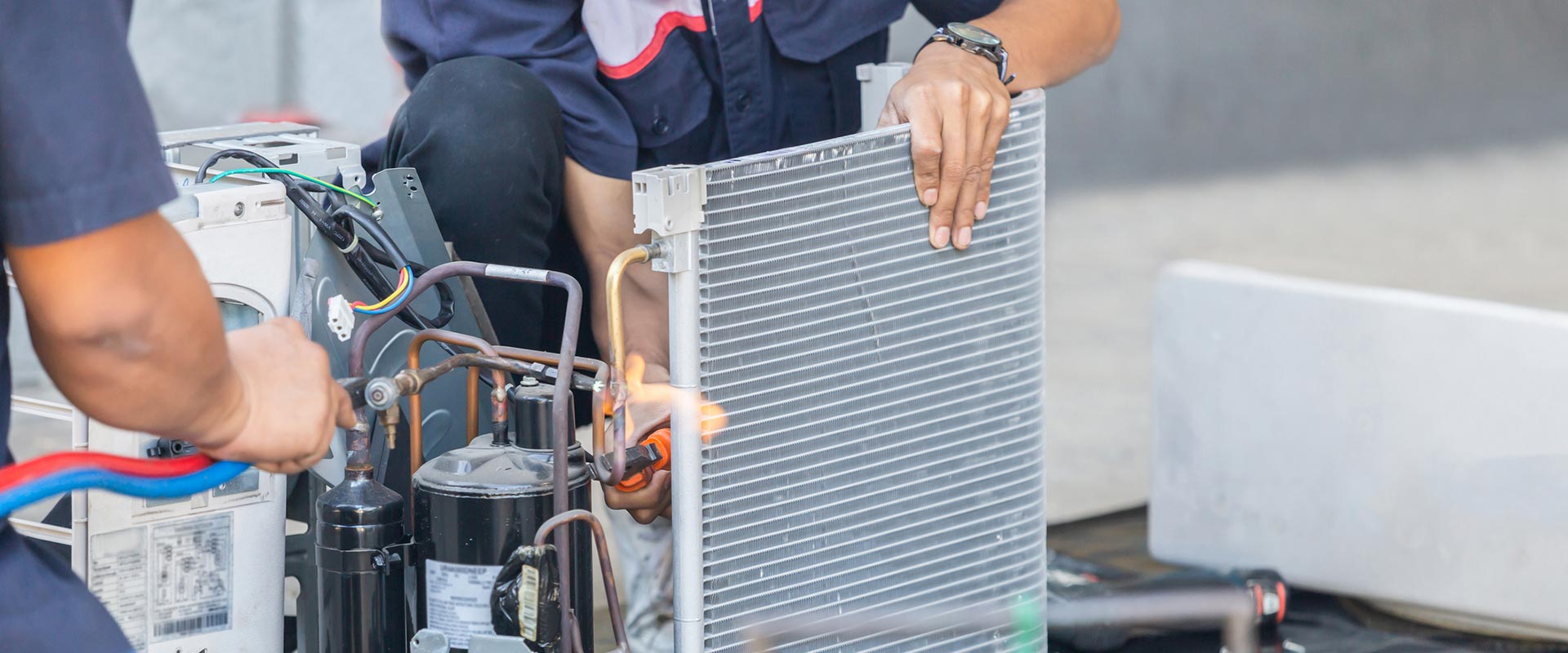
When your air conditioner isn’t cooling properly, the solution is a thorough inspection and accurate diagnosis. A qualified HVAC technician will locate and repair any refrigerant leaks before recharging the system to the manufacturer’s specifications. This approach:
Maximizes efficiency and extends the lifespan of your system
Protects your investment in your HVAC equipment
Ensures safe and environmentally responsible operation
Experienced contractors can also recommend system upgrades or, when appropriate, whole-home heating installation if your equipment is approaching the end of its service life.
Why This Matters for Homeowners
Ignoring refrigerant leaks can lead to problems beyond reduced cooling performance. Escaping refrigerant can have environmental consequences, and repeated “top-offs” may eventually result in major equipment failure or complete system replacement. Routine maintenance helps ensure reliable cooling and heating throughout the year. In addition to air conditioning services, Air Conditioning Systems provides professional heating repair, maintenance, and HVAC repairs for all major brands to keep your home comfortable and efficient.
Contact Air Conditioning Systems
Whether you’re experiencing cooling issues, suspect a refrigerant leak, or are considering a system upgrade, the experienced team at Air Conditioning Systems is here to help. We provide comprehensive HVAC diagnostics, repair, and installation services to keep your home comfortable throughout the year. If you’re in Concord, CA, call us today at (925) 676-2103 or fill out our contact form to get started.
We specialize in installing, servicing and repairing residential and commercial heating and air conditioning systems, and our team of union-trained technicians will show your property the utmost respect on each and every call for HVAC services. We are your comprehensive solution to all your heating and air conditioning needs, so contact us for a free quote today!
The crew was meticulous when cutting into the hard wood floors as well as incorporating the existing old, gravity furnace opening, to the new system in order to not have...
Karen K.
Just a quick note to thank you for the recent A/C installation. Both Darren and Justin were very thorough with the installation and took the time to explain the process...
Barbara S.
ACS has worked with us since we first purchased our present home in 2006. Successively they have installed a new HVAC unit, sealed and replaced older less efficient ducting, and...
Cap H.
Very prompt reasonable and real professionals installing. Highly recommend
Dave
Nicest people I have ever met and very knowledgable installers and techs! Thanks for everything A.C.S!
James Wilson
Timely and effective. I didn't get to meet my technician but I understand that he was pretty nice.